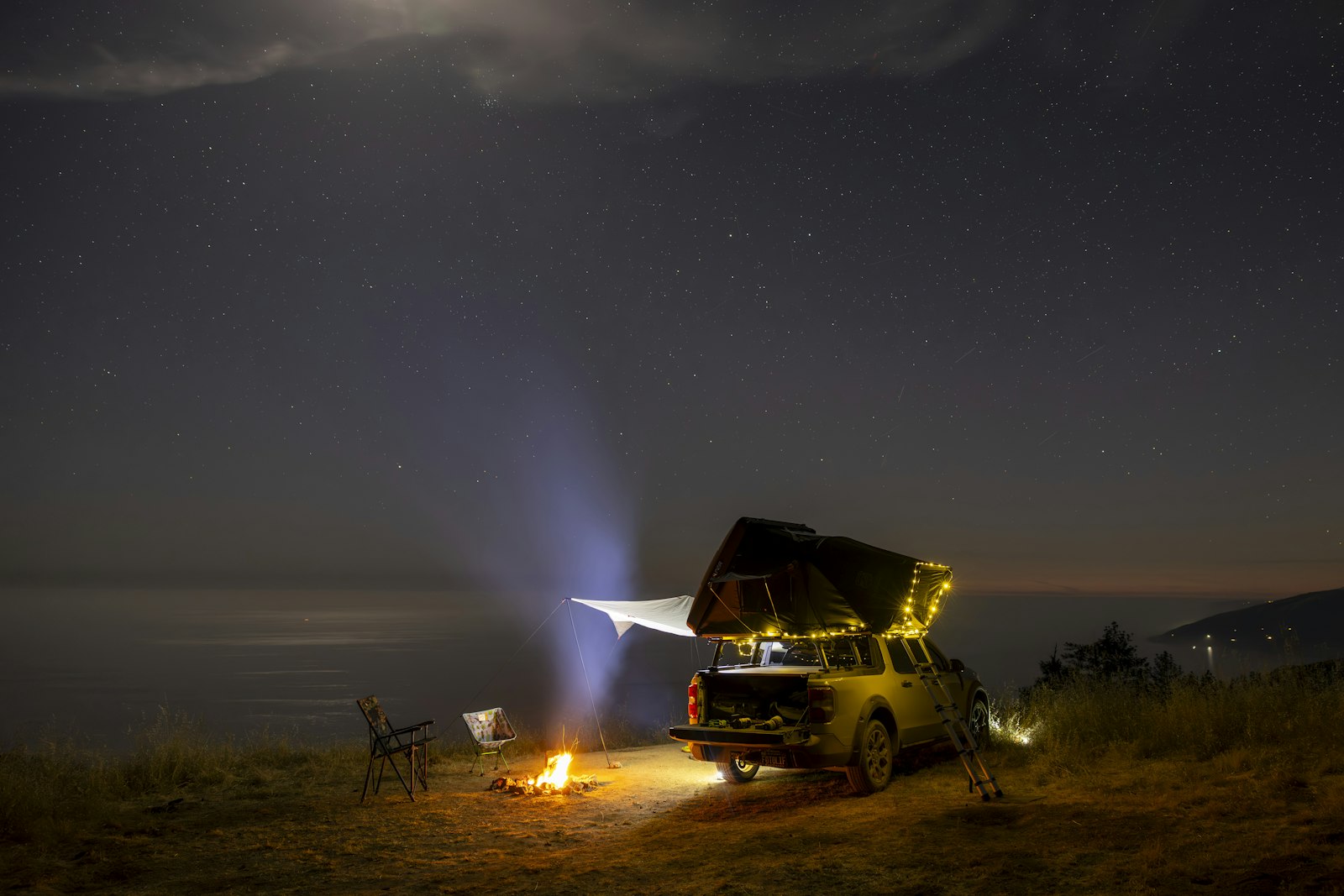
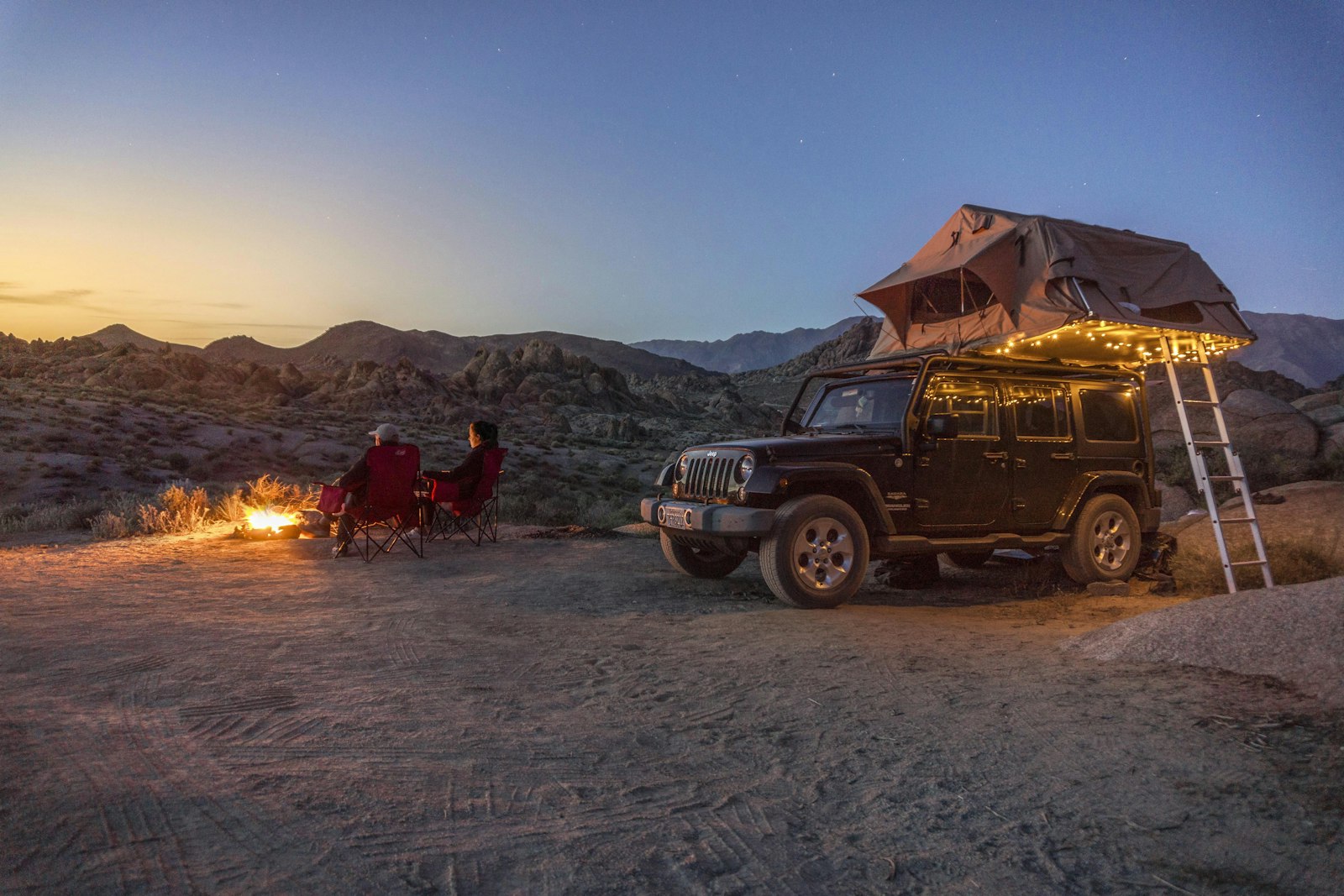
A rooftop tent has become the badge of an overland rig. Look at any trailhead car park and you’ll see a few. They are genuinely nice to sleep in. But plenty of experienced overlanders still use a ground tent, and they have good reasons. Before you spend the money, it helps to be honest about how you actually travel.
Rooftop tent vs ground tent at a glance
| Rooftop tent | Ground tent | |
|---|---|---|
| Cost | Entry models from around $750, premium ones over $2,500 | Good ones from around $100–400 |
| Weight | Often 50–75 kg (110–165 lb) on the roof | A few kilos, carried inside |
| Setup | A few minutes, bedding stays inside | 10–20 minutes, plus pads and bedding |
| Ground | Doesn’t matter: rocks, mud, slope | Needs a flat, clear spot |
| Leaving camp | Pack up before every drive | Leave it pitched and drive away |
| Fuel use and handling | Higher drag, higher centre of gravity | No effect |
Why people love rooftop tents
First of all, there is speed. Arrive late, pull two straps, unfold, climb up. The mattress is already there and so is the bedding. On a trip where you move every day, that saves real time and energy, especially in the rain.
You’re also off the ground, so rocky, muddy or sloping sites matter much less, and you’re away from water running through camp in a storm. Many people simply sleep better up there.
The downsides nobody mentions in the showroom
- Roof load. Check your vehicle’s dynamic roof load (while driving) and make sure the rack and tent together stay under it. The static limit when parked is higher, but the dynamic one is what decides what you can carry.
- Weight up high. 50–75 kg on the roof makes the vehicle roll more in corners and on side slopes. It also eats into payload, which our weight distribution guide explains.
- Base camp is harder. If you want to set up for three days and explore during the day, you have to pack the tent up every morning.
- The ladder at 3 a.m. Cold, sleepy and in the dark, it’s not everyone’s favourite part of the night. Think about kids, dogs and bad knees.
- It lives on the car. Taking a rooftop tent off between trips is a two-person job, so most stay on all year and cost you fuel every day.
Why a ground tent still makes sense
On the other hand, a good ground tent costs a fraction of the price, weighs very little and leaves the roof free for solar, a rack or nothing at all. You can pitch it, leave it, and drive off for the day. For families, a big ground tent often has more room than any rooftop tent. The main downsides, however, are setup time and needing a decent spot, which is harder in rocky desert or wet ground.
Which one should you choose?
- You move camp most days: rooftop tent.
- You like base camps and day trips: ground tent.
- You’re on a budget, or still working out what you like: ground tent. You can always upgrade later.
- Your vehicle is small or already near its payload: ground tent.
- Rough, rocky or wet sites are normal where you travel: rooftop tent.
Whichever you pick, sleeping warm matters more than where the tent sits. Our winter overlanding checklist covers pads and bags for cold nights, and our overland build order explains why a sleeping setup usually comes after tires and recovery gear.
FAQ
Is a rooftop tent warmer than a ground tent?
Not by much. You’re off the cold ground, but you’re also more exposed to wind. Insulation and your sleeping bag matter far more.
Can any vehicle carry a rooftop tent?
Only if the roof and rack are rated for it. Check the dynamic roof load in your owner’s manual, then add up the tent and rack weights.
Sources
- Expedition Portal – Head to head: roof top or ground tent
- Bullstrap – Rooftop tents 2026: RTT vs ground tent
Prices and weights are typical ranges and vary by model. Always check your vehicle’s roof load ratings and your rack manufacturer’s limits.
Featured photo: Stephan Widua on Unsplash.