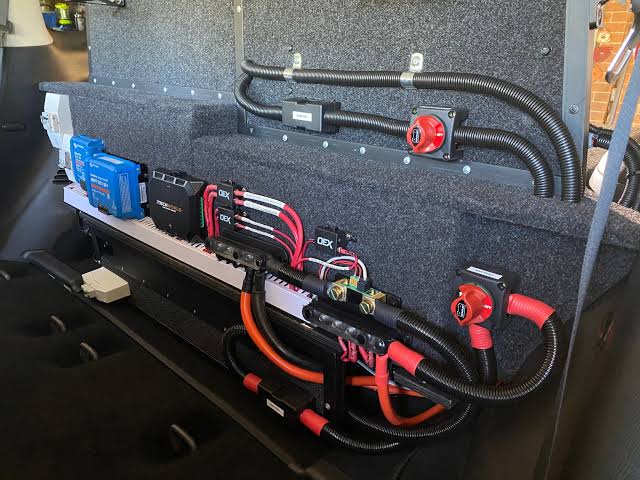
Reliable electricity is the backbone of modern overlanding. Whether you run a portable 12V fridge, power LED camp lights, or charge laptop batteries in remote backcountry locations, running out of power can derail an expedition. Traditional lead-acid and AGM batteries have served travelers for decades, but Lithium Iron Phosphate (LiFePO4) technology has completely transformed off-grid vehicle builds.
Understanding how to calculate your daily energy consumption allows you to size your battery bank accurately. This guide breaks down the math, science, and practical application of LiFePO4 power systems for your overland vehicle.
Why LiFePO4 is the Gold Standard for Overlanding
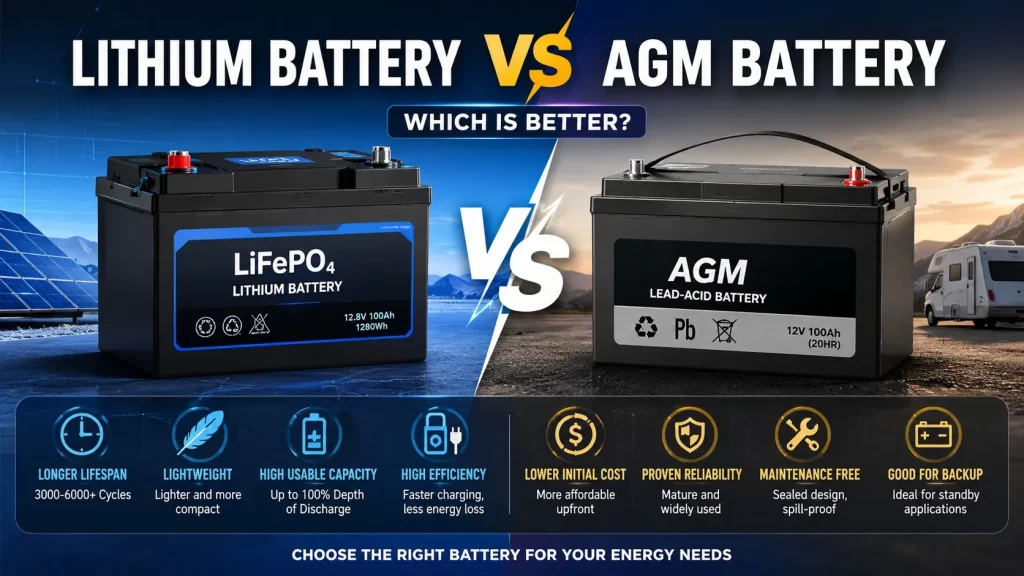
Before calculating power needs, it helps to understand why LiFePO4 chemistry dominates modern 12V auxiliary power systems. Compared to traditional AGM batteries, lithium iron phosphate offers distinct advantages:
- Usable Capacity: AGM batteries suffer damage if discharged below 50%. In contrast, LiFePO4 batteries safely offer 80% to 100% Depth of Discharge (DoD) without significantly shortening their lifespan.
- Weight Efficiency: Lithium batteries weigh roughly one-third of an equivalent lead-acid unit while providing twice the usable energy.
- Voltage Stability: LiFePO4 maintains a flat discharge curve, holding a stable ~13.0V to 13.2V output until the battery is nearly depleted.
- Cycle Life: Quality lithium cells last between 3,000 and 5,000 charge cycles, compared to just 300 to 500 cycles for AGM batteries.
Step 1: Audit Your Daily Off-Grid Energy Consumption
Sizing a power system requires calculating total daily energy usage in Watt-hours (Wh) or Amp-hours (Ah). Because power formulas operate on simple electrical relationships (Watts=Volts×Amps), you can easily audit every device in your setup.
Common Overland Electronics and Power Draw
| Device / Appliance | Average Draw (Watts) | Daily Run Time | Daily Consumption (Wh) |
|---|---|---|---|
| 12V Portable Fridge (12V) | 15–25W (cycling) | 24 Hours | ~400–600 Wh |
| LED Camp Lights | 10W | 4 Hours | 40 Wh |
| Water Pump | 60W | 0.25 Hours (15 min) | 15 Wh |
| Laptop Charger (via Inverter) | 65W | 3 Hours | ~220 Wh (incl. inverter loss) |
| Smartphone / Tablet Charging | 15W | 2 Hours | 30 Wh |
| Diesel Heater (Startup & Fan) | 10–40W | 8 Hours | ~200 Wh |
Adding these typical devices yields a total estimated load of approximately 905 Watt-hours per day.
Step 2: Convert Watt-Hours to Amp-Hours
Most 12V lithium batteries are rated in Amp-hours (Ah). To convert your daily Watt-hour requirement into Amp-hours at a nominal 12.8V system voltage, use the following formula:
Daily Requirement (Ah)=Nominal System Voltage (12.8V)Total Daily Watt-Hours (Wh)
Using our example total of 905 Wh:
12.8 V905 Wh≈70.7 Ah per day
Step 3: Account for System Inefficiencies and Autonomy
A common mistake in electrical design is sizing a battery bank to match exact baseline numbers without safety margins. Two key factors require extra battery capacity:
- Inverter Efficiency Losses: Converting 12V DC power to 110V/230V AC power via a pure sine wave inverter results in roughly a 10% to 15% efficiency loss.
- Days of Autonomy: Weather conditions or dense forest canopies often prevent solar panels from producing full output. Designing for at least 2 days of autonomy without charging ensures your system remains operational during rainy or overcast weather.
To cover a 70.7 Ah daily draw with a 1.25 multiplier for safety and efficiency, your ideal target is:
70.7 Ah×1.25=88.37 Ah per day
A single 100Ah LiFePO4 battery perfectly satisfies this baseline requirement for a single day of stationary off-grid camping without any solar or alternator replenishment. If you plan to camp in one location for two or three days without running your engine, upgrading to a 200Ah battery bank offers complete peace of mind.
Replenishment: Keeping the LiFePO4 Bank Charged
Sizing your battery bank is only half the equation; you must also replenish the energy you harvest. Overlanders primarily rely on two charging sources:
- DC-to-DC Alternator Chargers: Modern smart alternators require a dedicated DC-to-DC charger (such as a 30A or 50A unit) to safely charge lithium batteries while driving. A 30A DC-DC charger can restore 30Ah of energy for every hour of vehicle operation.
- Solar Power Systems: As a general rule of thumb, pair every 100Ah of lithium capacity with 150W to 200W of solar power. An MPPT solar charge controller maximizes power extraction during varying sunlight conditions.
Leave a Reply
You must be logged in to post a comment.