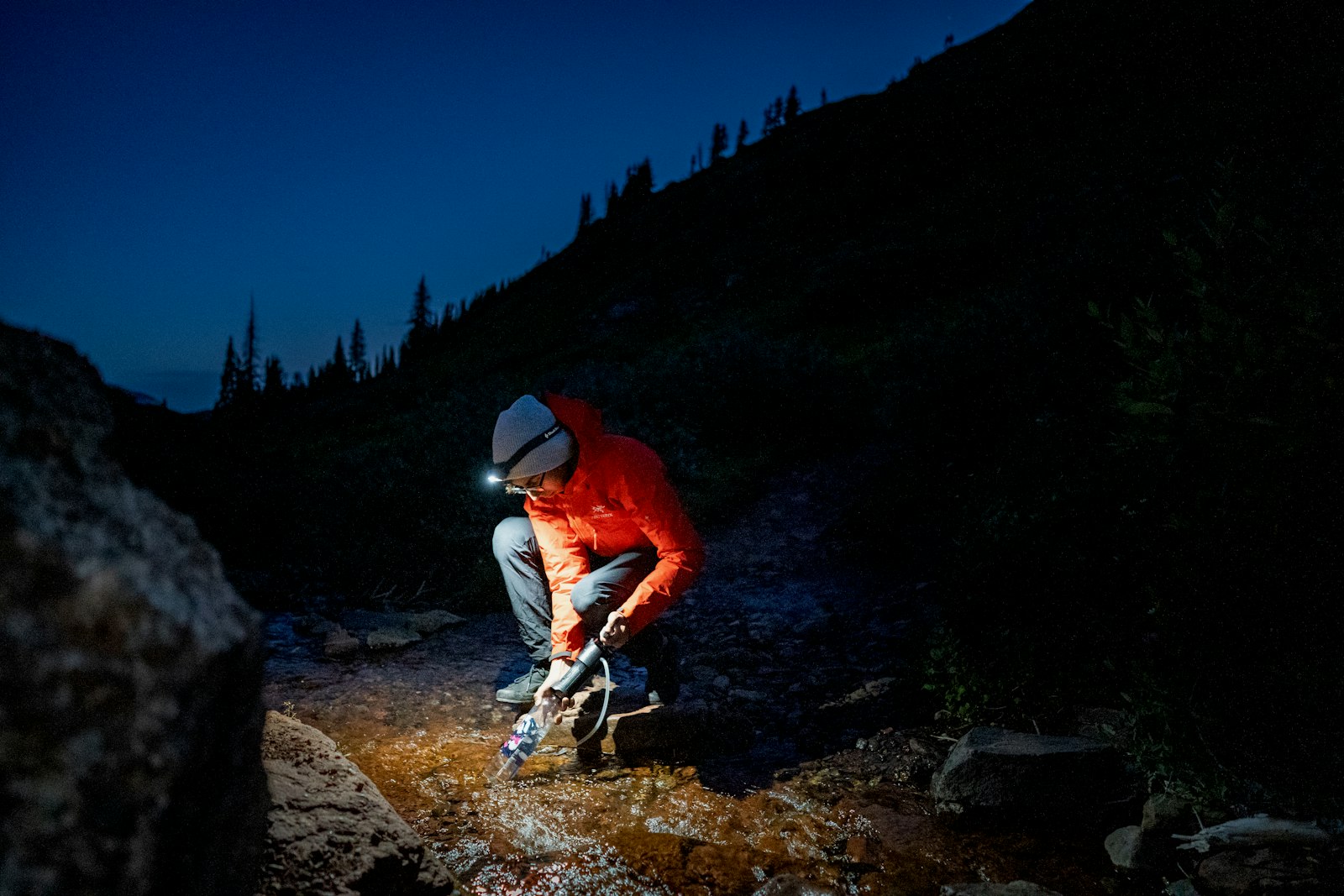
Carrying all your water from home works for short trips. However, on longer ones, or when your tank is running low, you’ll want to refill from streams, lakes or taps you’re not sure about. A good water filter for overlanding weighs little and can save you from a ruined trip. The tricky part is knowing what each method actually removes.
Water filter or purifier: the difference
A filter physically removes protozoa (like Giardia and Cryptosporidium) and bacteria. Viruses are too small for most filters to catch. A purifier deals with viruses as well, either with a much finer filter or by disinfecting the water with chemicals or UV light.
What each method removes
This table follows the US CDC’s guidance on backcountry water treatment.
| Method | Protozoa | Bacteria | Viruses |
|---|---|---|---|
| Boiling | Yes | Yes | Yes |
| Filter, 1 micron or smaller | Yes | Partly | No |
| Filter, 0.3 micron or smaller | Yes | Yes | No |
| Chlorine or iodine | Weak | Yes | Yes |
| Chlorine dioxide | Mostly | Yes | Yes |
| UV light (clear water only) | Yes | Yes | Yes |
In practice, boiling is the most reliable single method. Bring water to a rolling boil for one minute, or three minutes above about 2,000 m (6,500 ft). If you can’t boil, the CDC suggests filtering first and then disinfecting the filtered water.
There is one important limit, though: none of these methods removes fuel, chemicals or other pollutants. Avoid water near mines, farms, industry or anything with an oily sheen.
When do you need protection from viruses?
For example, in remote, lightly used areas such as much of the North American backcountry, protozoa and bacteria are the main concern and a good filter is usually enough. Add a purifier, tablets or UV when:
- you’re travelling in countries with poor sanitation
- you’re taking water from busy areas, near campsites, towns or livestock
- the water is for young children, older people, pregnant people or anyone with a weakened immune system
Which water filter suits overlanding?
| Type | Good for | Watch out for |
|---|---|---|
| Gravity filter | Treating several litres at camp with no effort | Needs somewhere to hang it |
| Squeeze filter | Light, cheap, works for a group with patience | Slow for big volumes |
| Pump filter or purifier | Murky or shallow sources | More moving parts |
| Tablets (chlorine dioxide) | Backup, viruses, very light | Wait time and taste |
| UV pen | Fast virus and bacteria treatment | Only clear water, needs batteries |
A simple water filter setup for overlanding
- Leave home with your tank and containers filled with treated tap water. Our guide on how much water to carry helps with amounts.
- Carry a gravity or squeeze filter for refills at camp.
- Add chlorine dioxide tablets as a backup, and for any water you’re unsure about.
- Let muddy water settle, or pour it through a cloth, before filtering. It makes the filter last longer.
- Keep treated and untreated containers clearly separate and labelled.
Look after your water filter
- Backflush or clean it as the manufacturer says, especially after silty water.
- Many hollow-fibre filters are damaged if they freeze. In cold weather, keep yours in your sleeping bag or a warm pocket. Our winter overlanding checklist has more cold-weather tips.
- Replace the cartridge when the manufacturer recommends, or if you suspect it froze or cracked.
If you’re setting up a camp kitchen, see our camp kitchen guide for one with running water.
Quick answers
Is boiling better than filtering?
Boiling kills all three types of germs, so it’s the most reliable single method. On the other hand, filtering is faster and uses no fuel, and it removes sediment, which boiling does not.
Can I use a water filter on tap water abroad?
A filter alone may not deal with viruses. In places where tap water isn’t safe, use a purifier, boil the water, or filter and then disinfect it.
Does a filter remove chemicals?
Some filters with activated carbon reduce taste and some chemicals, but no portable filter makes polluted water safe. Choose a cleaner source.
Sources
- CDC – A guide to drinking water treatment for backcountry and travel use
- Cascade Designs (MSR) – How is a filter different from a purifier?
This article is general information. Always follow your water treatment product’s instructions and local health advice.
Featured photo: Robert Ritchie on Unsplash.