A typical car first aid kit is built for small cuts and a headache on the way home. That’s fine in town, where help is ten minutes away. On a remote track, however, help might be hours away, so your first aid kit has to cover more. So does the person using it.
We’re not medics, and this isn’t medical advice. It’s a starting list, built from Red Cross recommendations and remote-travel kits, that you can adjust with a first aid trainer or your doctor.
Start with training, not the bag
After all, a well-stocked first aid kit is only as good as the person holding it. A remote or wilderness first aid course teaches you to assess an injury, stop bleeding, manage a casualty for hours and decide when to call for evacuation. If you only do one thing after reading this, book a course.
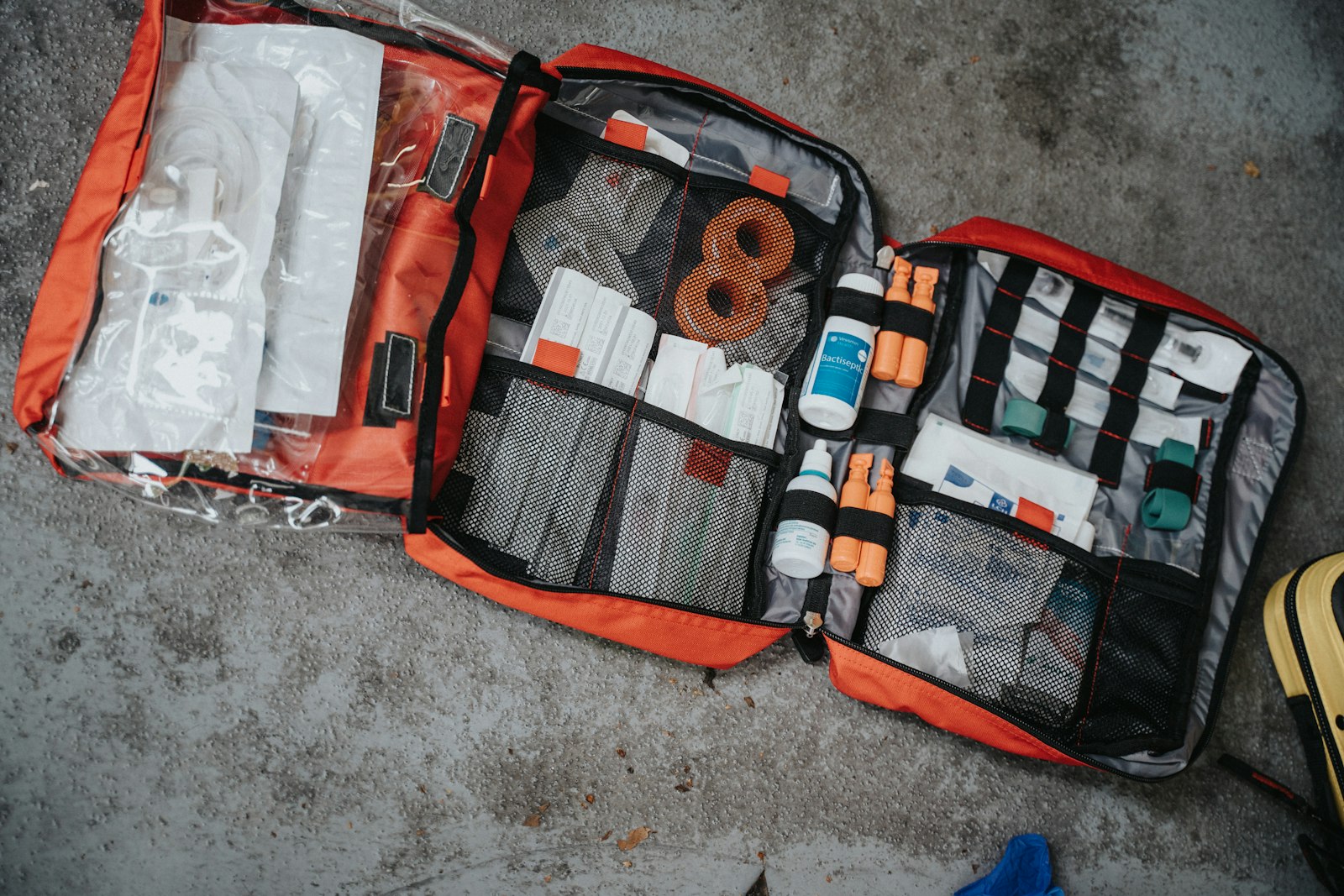
The overland first aid kit checklist
| Category | What to pack |
|---|---|
| Bleeding | Tourniquet, trauma or pressure bandages, gauze, wound packing gauze |
| Wounds | Adhesive bandages, wound closure strips, antiseptic wipes, saline for cleaning, antibiotic ointment |
| Sprains and fractures | Elastic bandages, a SAM-type moldable splint, triangular bandages |
| Burns | Burn dressings or gel, plenty of clean water for cooling |
| Tools | Trauma shears, tweezers, safety pins, disposable gloves, a headlamp |
| Medication | Pain relief, antihistamines, motion sickness tablets, any personal prescriptions |
| Environment | Emergency blankets, sunscreen, rehydration salts, hand warmers in winter |
| Information | A first aid guide, medical info for everyone in the group, emergency contacts |
Why bleeding control comes first
For example, serious bleeding can become life-threatening in minutes, long before help can reach a remote track. The Red Cross includes a bleeding control kit with a tourniquet in its vehicle kit list for this reason. Buy a genuine tourniquet from a reputable supplier, and learn how to use it on a course.
Make your first aid kit work on the road
- Keep the kit where everyone can reach it quickly, not under the recovery gear.
- Use a bag with clear sections so someone else can find things under stress.
- Heat and cold damage some medicines and adhesives. Check the kit every few months and replace anything past its date.
- Tell your group where the kit is, and who has training.
- Carry a way to call for help. Our satellite messenger vs PLB guide explains the options.
Plan for the long wait
Also, in remote areas, first aid often means looking after someone for hours. That means shelter, warmth, water and food as well as bandages. An emergency blanket and a warm layer can matter as much as anything in the bag. Our water guide and winter overlanding checklist help with the rest.
FAQ
Is a store-bought first aid kit enough?
It’s a good base. Most need extra bleeding control, splinting and personal medication for remote trips.
How often should I check my kit?
Before every big trip, and at least every few months. Replace used items straight away.
Sources
This article is general information, not medical advice. Take a recognised first aid course and ask a medical professional about medication for your group.
Featured photo: Mat Napo on Unsplash.