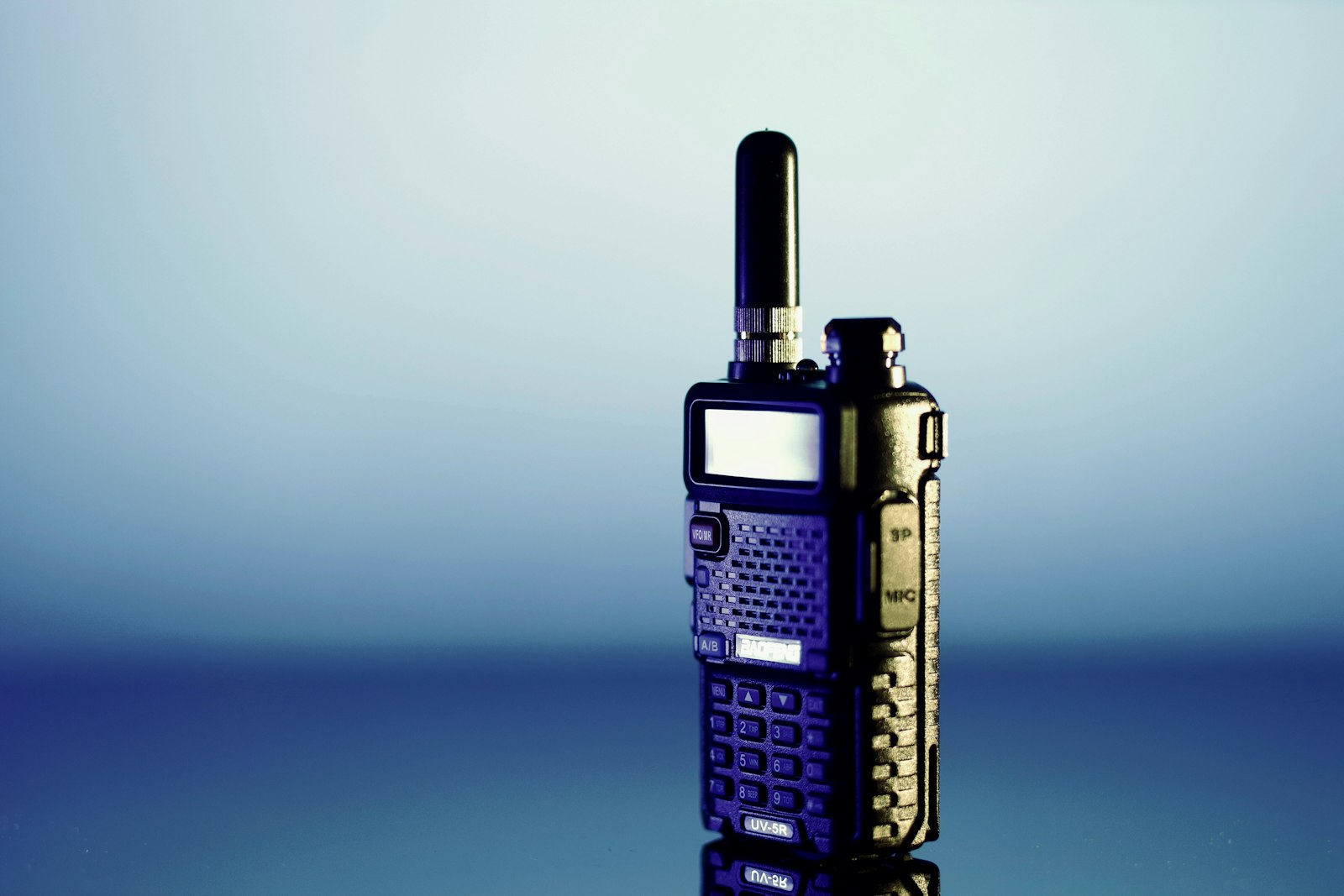
On a group trip, the radio is how you hear “stop, there’s a washout” from the lead vehicle. Phones don’t work for that, because there’s often no signal. Most US trail groups have moved to GMRS over the last few years, and ham radio still has a loyal following. The choice is mostly about how much you want to learn and what you want the radio to do.
This guide covers US rules. Other countries use different bands and licenses.
The four options at a glance
| FRS | CB | GMRS | Ham (amateur) | |
|---|---|---|---|---|
| License | None | None | Yes, no exam | Yes, with exam |
| Cost | Free | Free | $35 for 10 years | $35 FCC fee plus exam fee |
| Max power | 2W | 4W | 50W mobile on main channels | Much higher, depending on band and license |
| Repeaters | No | No | Yes | Yes, large networks |
| Good for | Simple handhelds | Truckers, some older groups | Trail groups and families | Long range, emergencies, the hobby itself |
GMRS: the practical choice for most groups
A GMRS license costs $35, lasts 10 years and covers your immediate family. There’s no exam. You apply online with the FCC and get a call sign, which you say on air from time to time. That simplicity is exactly why GMRS has become the default on group trips.
A mobile GMRS radio in the vehicle can transmit up to 50W on the main channels, with an external antenna on the roof. That gives far better range than a handheld. In addition, many areas have GMRS repeaters on hills that can extend range a lot. Handhelds are still handy for spotting outside the vehicle.
Ham radio: more capability, more learning
By contrast, a ham license needs an exam. The entry-level Technician exam is multiple choice and covers rules, safety and basic radio theory. Many people pass after a couple of weeks of study. In return, however, you get far more frequencies, higher power, large repeater networks and, with higher license levels, long-distance contact on HF bands.
For overlanders, ham makes sense if you travel solo in very remote areas, want the most options in an emergency, or simply enjoy radio. Many ham radios can also listen on GMRS frequencies, but it’s not legal to transmit on GMRS with a radio that isn’t certified for it.
Which should you get?
- You join group trail runs: GMRS. Ask the group which channel they use.
- You travel as a family in two vehicles: GMRS, one license covers you.
- You travel solo, far from people: consider ham, and carry a satellite messenger anyway.
- You just want something simple for a day: FRS handhelds work over short distances, with no license.
Radio talks to people nearby. It doesn’t replace a way to call for help from anywhere. For that, see our satellite messenger vs PLB guide or our inReach Mini 3 Plus comparison.
FAQ
How far can GMRS reach?
It depends heavily on terrain, antenna and power. Handhelds in hilly country may only reach a mile or two. A 50W mobile radio with a good antenna can do much better, and repeaters further still.
Do I need a license to listen?
No. Listening is fine. You only need a license to transmit on GMRS or amateur frequencies.
Sources
- Wikipedia – General Mobile Radio Service (fee and power rules)
- Quadratec – Trail communication options and the GMRS license
- FCC – General Mobile Radio Service (GMRS)
This article covers US rules as we understand them and isn’t legal advice. Check the FCC’s current rules and fees before you buy or transmit.
Featured photo: ZINO on Unsplash.