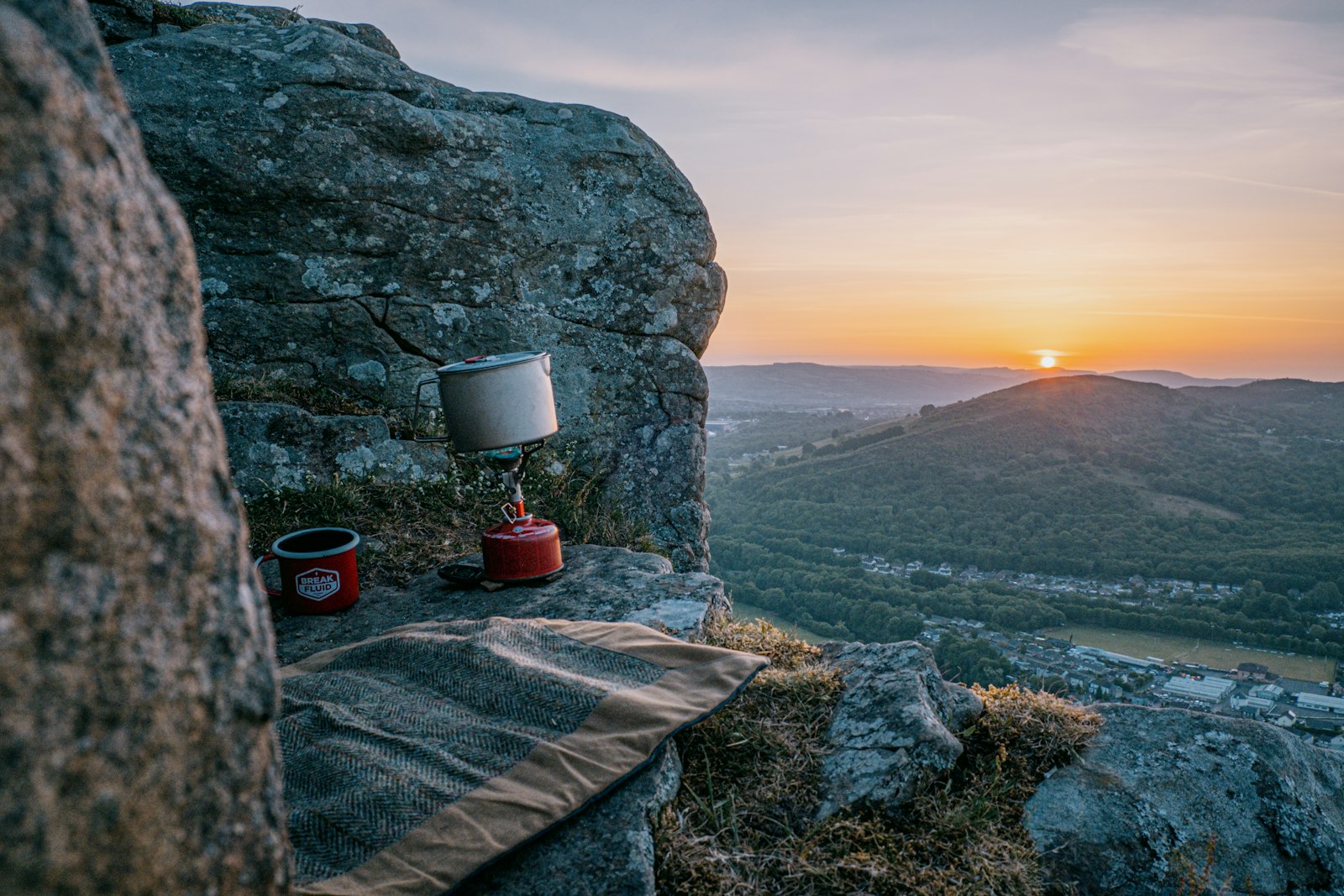
It happens to everyone once. A cold morning, a sleepy crew waiting for coffee, and a stove that gives a weak, sputtering flame that wouldn’t boil an egg. The stove is usually fine. Instead, the camp stove fuel just doesn’t like the cold.
Why gas stoves struggle in the cold
Inside a canister, the fuel is mostly liquid. It has to boil into gas to create pressure and reach the burner. Each fuel has a temperature below which it barely does that:
| Fuel | Stops vaporising at about | What that means |
|---|---|---|
| Butane (n-butane) | −1°C (30°F) | Weak near freezing. Common in cheap canisters and cassette stoves |
| Isobutane | −12°C (11°F) | Better, usually blended with propane in backpacking canisters |
| Propane | −42°C (−44°F) | Works in almost any cold you’ll camp in |
There’s also a second problem. Boiling fuel cools the canister as you cook, so a canister that started at 2°C can drop below freezing during a long simmer. That’s why the flame often fades halfway through breakfast.
Camp stove fuel options for vehicle trips
- Butane cassette stoves: cheap, simple and popular for car camping. Great in summer, frustrating in winter.
- Isobutane-propane canisters: the screw-on kind for backpacking stoves. Fine to a few degrees below freezing if you keep them warm.
- Propane cylinders and tanks: the best choice for cold-weather car camping. A refillable tank with a two-burner stove works almost regardless of temperature.
- Liquid fuel (white gas): very reliable in deep cold, but heavier, messier and needs priming.
How to keep a canister stove working
- Keep the canister warm before you cook. Sleep with it in your sleeping bag, or keep it in a jacket pocket.
- Get it off the frozen ground. A piece of foam pad or wood underneath helps.
- Shield it from wind, but never wrap the canister itself so tightly that heat builds up near the burner.
- For long cooking, stand the canister in a shallow dish of lukewarm water. Not hot, just not frozen.
- Carry a spare canister and swap them, so one is warming in your jacket while the other works.
One rule we’d underline: never cook inside a closed tent or vehicle. Stoves produce carbon monoxide, and our diesel heater safety guide explains why that matters so much in a small space.
What we’d choose
In short, for winter trips with a vehicle, a propane two-burner stove is the least fuss. If you already own a butane cassette stove, keep it for summer and bring a propane stove when the forecast drops below freezing. For more cold-weather prep, see our winter overlanding checklist and our camp kitchen guide.
FAQ
Is it safe to warm a gas canister?
Gently, yes: body heat or lukewarm water. Never put a canister near a flame, on a hot surface or in boiling water.
Why does my stove work at the start and then fade?
The canister cools as the fuel boils. The propane in a blend also burns off first, leaving the butane that struggles in the cold.
Sources
- Backpacker – How to make your canister stove efficient in the cold
- Cascade Designs (MSR) – What fuels are in IsoPro canisters?
Follow your stove and canister manufacturer’s instructions. Never use a gas stove in an enclosed space.
Featured photo: Nick Russill on Unsplash.