Water is the one thing you can’t improvise on an overland trip. Run out of fuel and you wait; run out of water in a hot, remote place and you’re in real trouble. It’s also heavy, so carrying far too much eats into your payload. Here’s how to work out a sensible amount, how to store it, and how to make it last.
Start with one gallon per person per day
A widely used emergency-planning guideline is one gallon (about 3.8 litres) of water per person per day: roughly half for drinking and half for cooking and basic hygiene. Hot weather and hard physical work can double the drinking part, and children, nursing mothers and anyone unwell need more.
For most overland trips that’s a good baseline. If you wash dishes generously, shower or travel in desert heat, plan for more.
Quick reference
Based on one gallon (3.8 litres) per person per day, before any reserve:
| People | 2 days | 4 days | 7 days |
|---|---|---|---|
| 1 | 2 gal / 8 L | 4 gal / 15 L | 7 gal / 27 L |
| 2 | 4 gal / 15 L | 8 gal / 30 L | 14 gal / 53 L |
| 4 | 8 gal / 30 L | 16 gal / 61 L | 28 gal / 106 L |
On top of that, we’d carry a reserve of at least one extra day for everyone in the vehicle, more in hot or very remote areas. Breakdowns, closed roads and dry water sources happen.
Remember the weight
Water weighs about 1 kg per litre, or roughly 8.3 lb per US gallon. A 4-day trip for two with a day’s reserve is around 38 litres, so close to 40 kg once you add the containers. On smaller vehicles that’s a big share of the payload. In our look at the Suzuki Jimny XL, water was one of the things that used up its roughly 360 kg payload fastest.
Where you put it matters too. Keep heavy water containers low and between the axles rather than on the roof or hanging off the back. Our guide to overland vehicle weight distribution explains why.
How to carry it
| Option | Good for | Watch out for |
|---|---|---|
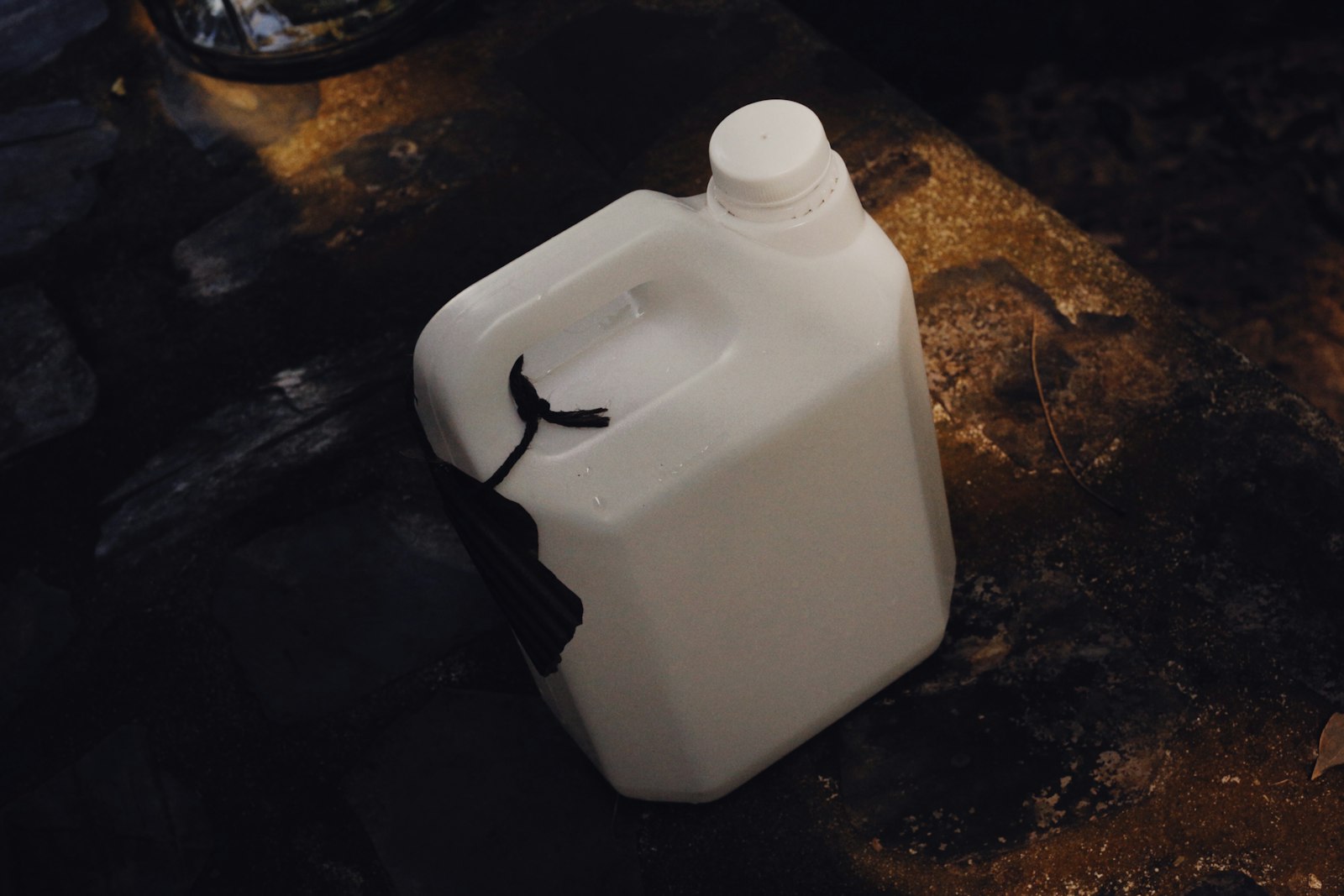
| Jerry cans (food-grade) | Flexible, easy to refill and carry to a tap | Need securing; never reuse a fuel can for water |
| Fixed tank | Large volume, low and out of the way, can feed a tap | Harder to clean, adds permanent weight |
| Collapsible bladders | Extra capacity that packs flat when empty | Can puncture; best as a backup |
| Bottled water | Simple drinking supply | Bulky, creates rubbish |
- Use sealed, food-grade containers and keep them out of direct sun.
- Split your supply across at least two containers, so one leak or contaminated can doesn’t take all your water.
- Keep drinking water separate from washing water if you can.
- Rinse and refresh stored water regularly. Emergency-storage guidance suggests replacing it every six months.
Make it last
- Cook one-pot meals and wipe pans out before washing them. Our easy camping meals are planned with that in mind.
- Use a spray bottle for rinsing dishes and hands.
- Pre-prepare food at home so less washing happens at camp.
- Refill at every reliable source, even when you’re not low.
- Carry a way to treat water from rivers or tanks, so a refill is possible if you need it.
Signs you’re not drinking enough
Thirst, dark urine, headaches and tiredness are early signs of dehydration. In heat, drink regularly through the day rather than waiting until you’re thirsty, and don’t ration drinking water while you still have washing water you could cut back on.
Quick answers
How much water should I carry per person per day?
About one gallon (3.8 litres) is a common baseline, split between drinking, cooking and hygiene. Plan more in hot weather.
How heavy is 20 litres of water?
About 20 kg, plus the weight of the container.
Can I store water in an old fuel jerry can?
No. Use containers made for drinking water, and keep them for water only.
Sources
Featured photo: Alexey Demidov on Unsplash.