The fuel gauge says 120 km to empty. The next town is 140 km away, and the map doesn’t show that 30 km of it is sand. Most stories about running out of fuel start like this. Carrying a little extra fuel makes it one of the easiest problems to avoid, and one of the most expensive to solve once you’re stuck.
Step 1: know your real range
First, the range on your dashboard is based on recent driving, usually on pavement. Off-road, however, fuel use goes up, sometimes a lot. Sand, mud, low range, steep climbs, a heavy load and a roof rack all add to it. Some overlanders see 30–50% higher consumption on tough tracks.
So the best way to know is to measure it. On your next trip, fill up before the dirt section, fill up again after, and note the distance. Do that a few times and you’ll know your vehicle’s off-road number.
Step 2: plan the gap, then add a reserve
Look at the longest stretch between reliable fuel stops on your route. Not the fuel stations on the map, but the ones you’re confident will be open and have fuel. Then:
- Estimate fuel for that stretch using your off-road consumption.
- Add a reserve for detours, closed roads and getting lost. Many people plan for 25% or more.
- Subtract what your main tank holds. What’s left is what you need to carry.
| Example | Value |
|---|---|
| Longest gap between fuel stops | 450 km |
| Off-road consumption | 16 L/100 km |
| Fuel for the gap | 72 L |
| Plus 25% reserve | 90 L |
| Main tank | 70 L |
| Extra to carry | 20 L (one jerry can) |
Step 3: choose how to carry extra fuel
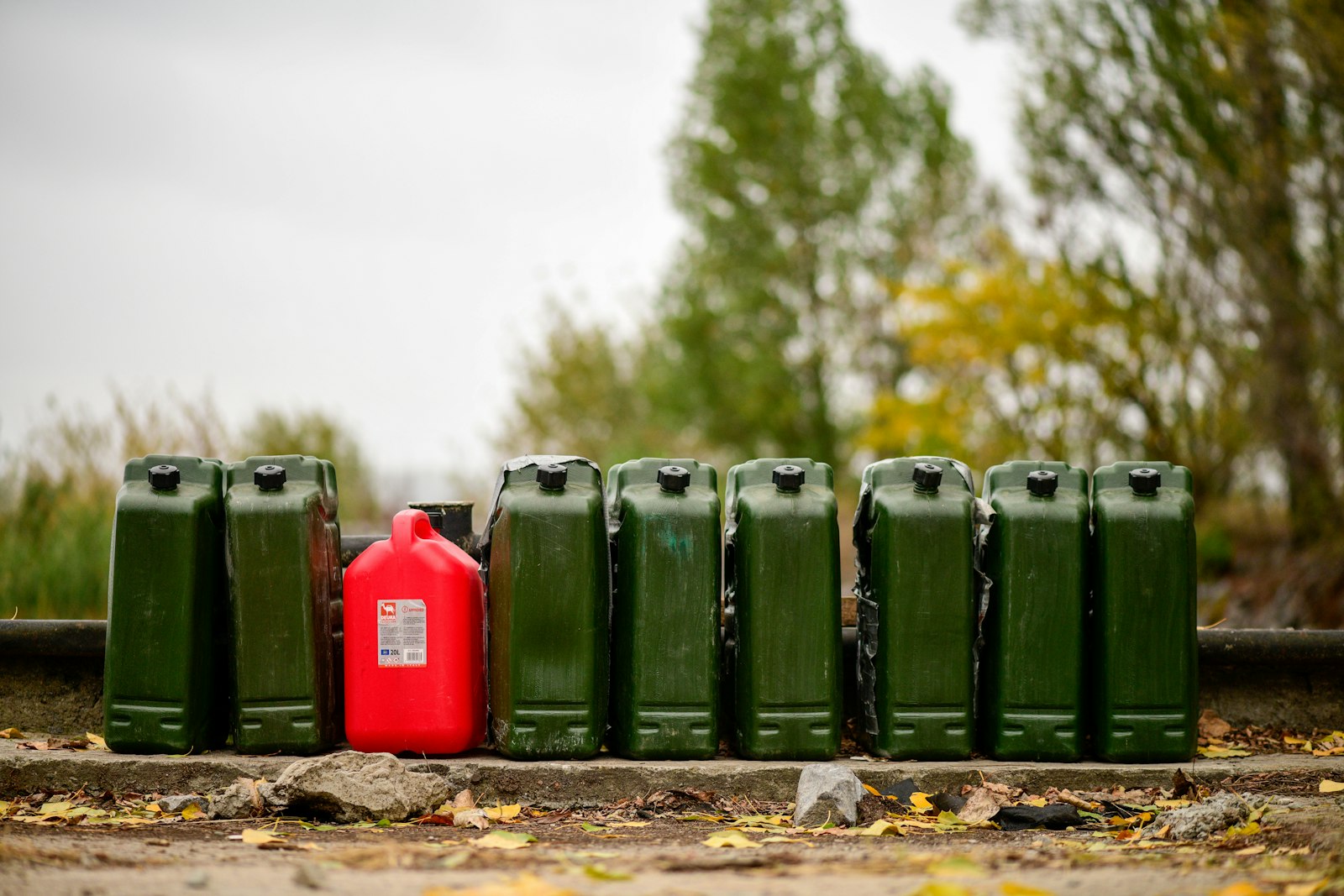
- Jerry cans: usually 10 or 20 litres. Cheap and flexible, and you can leave them at home when you don’t need them. Use approved fuel containers and check the rules where you live and travel.
- Flat-pack cans: slimmer containers designed to mount on racks and tire carriers.
- Long-range or auxiliary tanks: the cleanest option for long trips. Fuel stays low in the vehicle and out of the way, but installation costs more.
Carry it safely
- Mount containers outside the cabin, on a rack, tire carrier or rear bumper. Never carry fuel inside with you.
- Keep them away from exhaust pipes and out of direct sun where possible. Heat and altitude build pressure, so vent carefully as the manufacturer recommends.
- Fill containers on the ground, not on a plastic bed liner or inside the vehicle, to reduce the risk of a static spark.
- Don’t forget weight. 20 litres of petrol weighs about 15 kg, plus the can. On a roof, that adds up fast. Our weight distribution guide explains why heavy things should go low.
- Keep fuel well away from your campfire and stove.
Also, diesel is less volatile than petrol, which makes it easier to carry, but the same mounting and container rules apply.
Before a remote trip
Fill up at every reasonable chance, even when you have half a tank. It’s the simplest habit in overlanding. For the rest of the prep, see our overland build order and recovery gear guide.
FAQ
Can I carry a jerry can on the roof?
Many people do, but it puts heavy weight up high and counts against your roof load. A tire carrier or rear rack is usually better.
How long does stored fuel last?
Petrol starts to degrade after a few months. Rotate the fuel in your cans into the tank and refill them regularly.
Sources
Rules on carrying fuel vary by country and state. Use approved containers, follow the manufacturer’s instructions and check local regulations.
Featured photo: Олександр Білоцерківець on Unsplash.