If you’re adding an auxiliary battery to run a fridge, lights and devices, the first decision is chemistry: a traditional AGM (absorbent glass mat) lead-acid battery, or lithium iron phosphate (LiFePO4). Lithium costs more up front, but the gap shrinks a lot once you compare usable capacity, weight and lifespan rather than sticker price.
Quick comparison
| AGM | LiFePO4 | |
|---|---|---|
| Typical usable capacity of a 100Ah battery | About 50Ah (staying above 50% charge) | About 80–95Ah |
| Typical weight, 100Ah | About 28–32kg | About 10–13kg |
| Typical cycle life | A few hundred cycles at deep discharge | Several thousand cycles |
| Voltage under load | Drops steadily as it discharges | Stays fairly flat until nearly empty |
| Charging in freezing weather | Fine | Needs a low-temperature cut-off or built-in heating |
| Up-front cost | Lower | Higher |
Figures vary by brand and model, so check the spec sheet of the specific battery you’re considering.
1. Usable capacity
Both batteries can say 100Ah on the label, but you can’t use all of it in both. AGM batteries last much longer if you avoid regularly discharging them below about 50%, so a 100Ah AGM realistically gives you around 50Ah. A 100Ah LiFePO4 can be used down to 80% or more of its capacity without much effect on its life. In practice, one lithium battery gives you close to double the usable energy of an AGM with the same rating.
2. Weight
A 100Ah AGM typically weighs around 28–32kg, and a 100Ah LiFePO4 around 10–13kg, so swapping one for one saves roughly 15–20kg. The bigger saving comes when you compare equal usable energy. To match the usable capacity of one 100Ah lithium battery you’d need about 200Ah of AGM, which is two batteries and around 60kg. Against that, the lithium battery saves something like 45kg. On a vehicle where payload is already tight, that matters.
3. Lifespan and cost over time
Quality LiFePO4 batteries are commonly rated for several thousand cycles. AGM batteries used deeply every day may only last a few hundred. If you camp often, an AGM may need replacing several times over the life of one lithium battery, which closes much of the price gap. If you only camp a few weekends a year, an AGM will often age out from time before it wears out from cycles, and the cheaper option can make more sense.
4. Charging
Lithium accepts high charge current until it’s nearly full, while AGM charging slows down a lot in the last part of the charge. That means lithium makes better use of short drives and limited solar. It also needs the right charge profile, so make sure your DC-DC charger and solar regulator have a lithium setting. Many smart alternators also need a DC-DC charger to charge an auxiliary battery properly.
5. Cold weather
LiFePO4’s main weakness is cold. Most should not be charged when the cells are below about 0°C (32°F). If you camp in freezing conditions, look for a battery with low-temperature charge protection or built-in heating, or mount the battery inside the cabin where it stays warmer.
A worked example: running a fridge for a long weekend
Say your fridge, lights and phone charging use about 40Ah a day. That is a reasonable figure for a 40 to 50 litre compressor fridge in warm weather plus a few LEDs, though your number may be higher or lower. With no charging at all:
| Battery | Usable capacity | Days without charging |
|---|---|---|
| 100Ah AGM | About 50Ah | About 1.25 days |
| 2 x 100Ah AGM | About 100Ah | About 2.5 days |
| 100Ah LiFePO4 | About 80–95Ah | About 2 days |
In real life, driving and solar top the battery up, so the numbers stretch. The point is the comparison: one lithium battery does roughly the work of two AGMs, at less than half the weight of one of them. Plug your own devices into our 12V power calculator for a number that fits your setup.
Mixing and upgrading
Don’t connect an AGM and a lithium battery together in the same bank. They charge and discharge at different voltages, and one will end up working harder than the other. If you are upgrading, replace the whole auxiliary bank at once.
Check the rest of the system when you switch to lithium. Older solar regulators and battery chargers may not have a lithium profile. Your starter battery can stay lead-acid, because it is charged separately through a DC-DC charger.
Safety and mounting
- Fuse it close to the battery. A short circuit in an unfused cable can start a fire, whatever the chemistry.
- Secure it properly. A battery that comes loose on corrugations is a heavy, live object bouncing around the vehicle.
- Ventilation: AGM batteries are sealed, but can vent gas if badly overcharged. LiFePO4 is one of the most stable lithium chemistries, and quality batteries include a battery management system (BMS) that protects against overcharge, deep discharge and short circuits.
- Buy from a brand that publishes a full data sheet. Cycle life, BMS limits and low-temperature behaviour should all be listed.
Not ready to wire in a second battery? A portable power station is another route. We compare the two in portable power station vs dual battery.
Which should you choose?
- Occasional weekend trips, tight budget: AGM is still a reasonable choice.
- Frequent or long trips, weight-sensitive vehicle, or a fridge running 24/7: LiFePO4 is usually the better long-term buy.
Once you’ve picked a chemistry, the next step is working out how big a battery you need. Our LiFePO4 sizing guide walks through the maths, and our look at REDARC’s REDWorks panels covers one way to handle the charging side.
Figures in this article are typical values from manufacturer specifications. Always check the data sheet for the battery you buy.
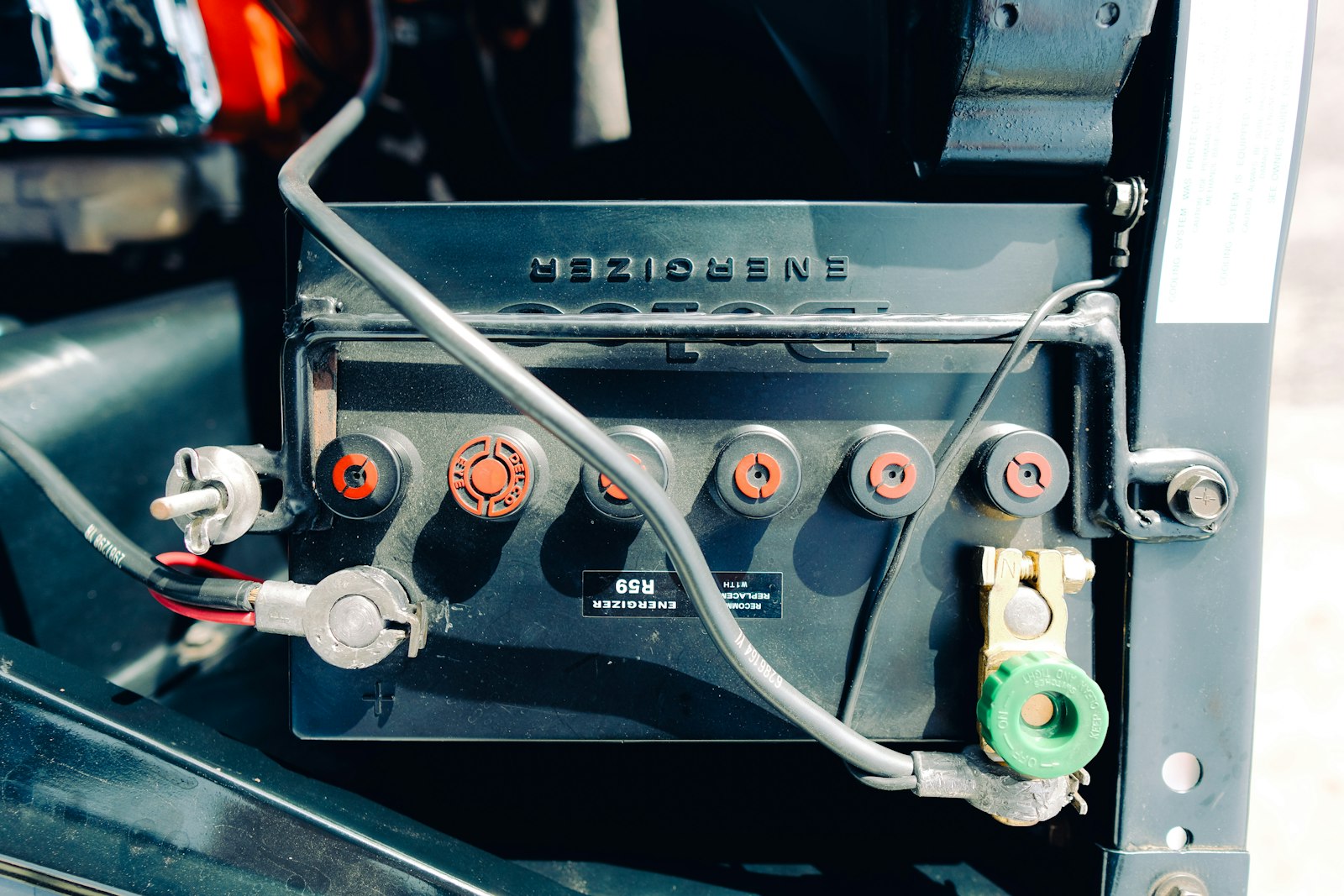
Featured photo: Wesley Tingey on Unsplash. The battery shown is a standard lead-acid starter battery.