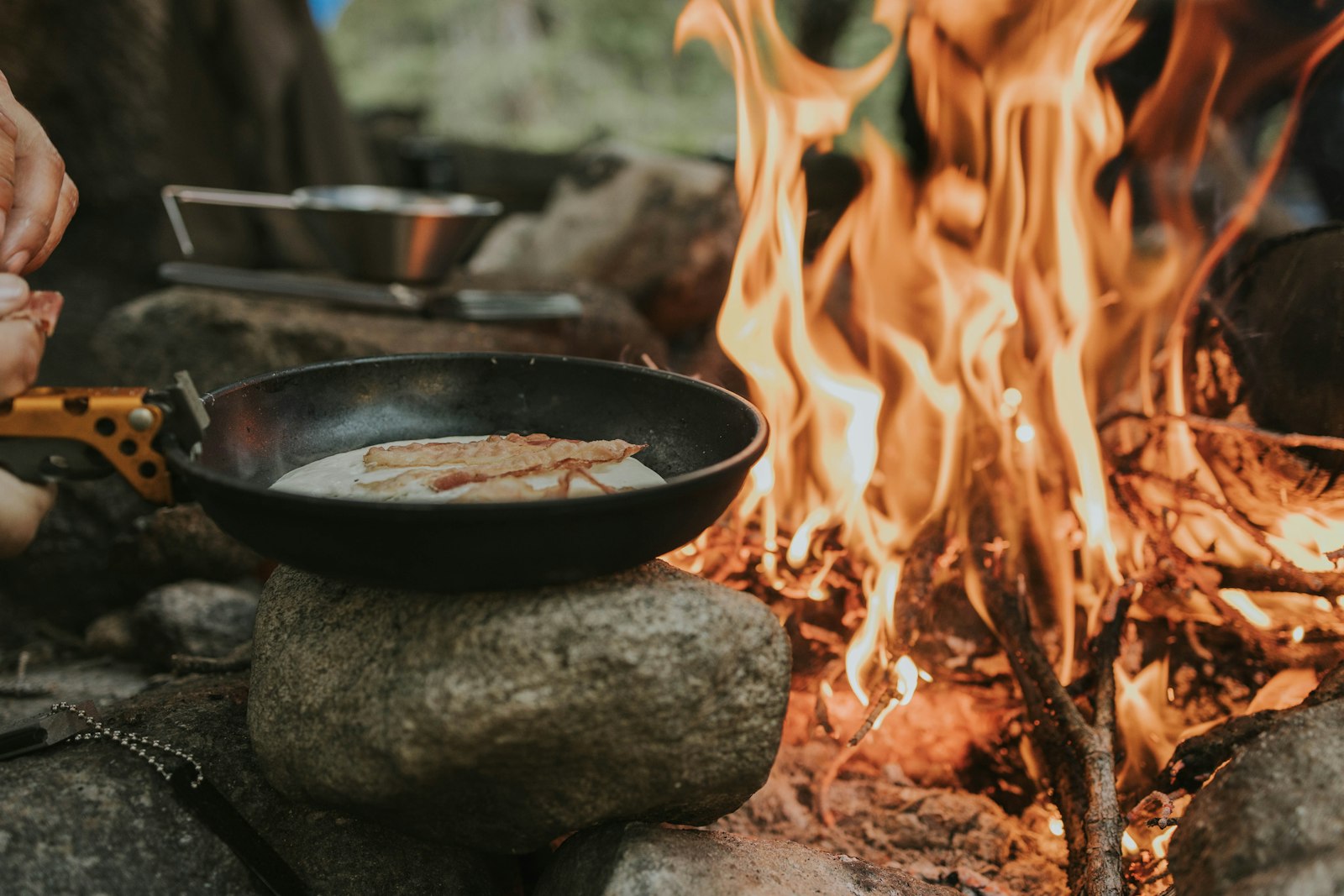
Good camp food doesn’t need to be complicated. The best meals on an overland trip are the ones you can mostly prepare at home, cook in one pot or one pan, and clean up with very little water. Here are ten easy ideas, from breakfast to dessert, with a tip for each on making it work at camp.
Before you go: three habits that make camp cooking easier
- Prep at home. Chop vegetables, mix spices, cook rice or brown mince before the trip. Store everything in labelled zip bags or containers.
- Keep the fridge cold. Perishable food should stay at or below 4°C (40°F). Pre-chill your fridge or cooler before loading it, and pack the items you’ll eat last at the bottom.
- Plan for water. Every pot you wash costs water. One-pot meals and foil packets save a lot of it.
Breakfast
1. Breakfast burritos
Scrambled eggs, cheese, cooked bacon or sausage and some sautéed peppers, wrapped in tortillas. Camp tip: make and wrap them at home, freeze them, and warm them in foil over the coals or in a dry pan. They double as ice packs for the first day.
2. Grilled cheese sandwiches
Sturdy bread, a mix of cheeses and, if you like, sliced tomato or cooked bacon. Camp tip: a cast-iron pan or a pie iron over medium coals gives a crisp outside without burning.
Lunch and sides
3. Quesadillas
Tortillas filled with cheese, cooked chicken, black beans and corn. Camp tip: they cook in minutes on a stove, so they’re ideal for a quick lunch stop.
4. Foil packet vegetables
Sliced potatoes, peppers, onions and courgette with oil, salt and herbs, sealed in heavy-duty foil. Camp tip: cut everything to a similar size so it cooks evenly, and use a double layer of foil on hot coals.
5. Trail mix energy bites
Oats, nut butter, honey, dried fruit and seeds, rolled into balls. Camp tip: make these at home; they keep well and need no cooking.
Dinner
6. One-pot jambalaya
Rice, smoked sausage, chicken, peppers, onion and Cajun spices simmered in one pot. Camp tip: using pre-cooked sausage and chicken cuts the cooking time and makes food safety easier.
7. Campfire chili
Mince, beans, tomatoes and spices simmered in a Dutch oven. Camp tip: cook a big batch at home, freeze it flat in bags, and just reheat it at camp. Leftovers make great burrito filling the next day.
8. Dutch oven pizza
Ready-made dough or flatbreads with your favourite toppings, baked in a Dutch oven. Camp tip: put more coals on the lid than underneath so the top cooks before the base burns.
Dessert
9. S’mores dip
Chocolate chips topped with marshmallows in a cast-iron skillet, heated until melted. Serve with graham crackers or biscuits. Camp tip: keep the pan at the edge of the fire, not in the middle, or the chocolate will scorch.
10. Banana boats
Slice a banana lengthwise through the peel, fill it with chocolate and marshmallows, wrap it in foil and heat it in the coals for a few minutes. Camp tip: eat it straight from the peel with a spoon; no dishes needed.
A three-day menu using these recipes
| Day | Breakfast | Lunch | Dinner | Dessert |
|---|---|---|---|---|
| 1 | Breakfast burritos (frozen at home) | Quesadillas | Campfire chili (made at home, reheated) | Banana boats |
| 2 | Grilled cheese sandwiches | Leftover chili in tortillas | One-pot jambalaya | S’mores dip |
| 3 | Burritos or oats | Energy bites and fruit | Dutch oven pizza with foil packet vegetables | Whatever is left |
The order matters. The meals that rely on fresh meat go early, while the fridge or cooler is coldest. Frozen burritos and chili act as ice for the first day. Pizza and vegetables can wait, because they cope better if the fridge struggles in the heat.
Food safety at camp
Camp kitchens make it easy to get lazy about this, and a stomach bug can end a trip. The USDA rules are simple:
- Keep perishable food at or below 40°F (4°C).
- Don’t leave it out for more than 2 hours, or 1 hour when it is above 90°F (32°C).
- Cook burgers and mince to 160°F (71°C) and all poultry to 165°F (74°C). A small food thermometer is the only reliable way to check over a campfire.
- If there is no running water, use hand sanitiser with at least 60% alcohol before cooking.
A 12V fridge makes the first rule much easier than ice. Our fridge vs cooler comparison looks at when the upgrade is worth it.
Packing the food
- Freeze flat bags of chili or sauce. They stack well and thaw evenly.
- Put dry ingredients for each meal in one labelled bag, so dinner is one grab instead of five.
- Keep a small “spice kit” with salt, pepper, chilli flakes, Cajun seasoning and oil in leak-proof bottles.
- Carry heavy-duty foil. Thin kitchen foil tears on coals.
Cleaning up with less water
Wipe pans with a paper towel while they are still warm, then wash. It removes most of the grease and saves a surprising amount of water. Leave No Trace recommends straining food scraps out of dishwater and packing them out, then scattering the water at least 200 feet from lakes and streams.
Cooking gear that helps
A two-burner stove, a cast-iron pan and a Dutch oven will cook every meal on this list. If you’re thinking about a more permanent setup, our look at the HitchFire freestanding camp kitchen covers one all-in-one option. Always check local fire restrictions before lighting a campfire.
FAQ
What are the easiest meals to cook while camping?
Meals you prepare at home and reheat, such as chili, plus simple one-pot dishes and foil packets cooked over coals.
How do I keep food safe without a fridge?
Use a good cooler with plenty of ice, keep it in the shade, open it as little as possible and eat the most perishable food first. Our 12V fridge vs cooler guide compares both options.
How much stove fuel should I bring?
Measure it at home by weighing a canister before and after cooking a typical day’s meals, then add a spare. Our camp stove fuel guide explains how.
Sources
Featured photo: Conner Baker on Unsplash.