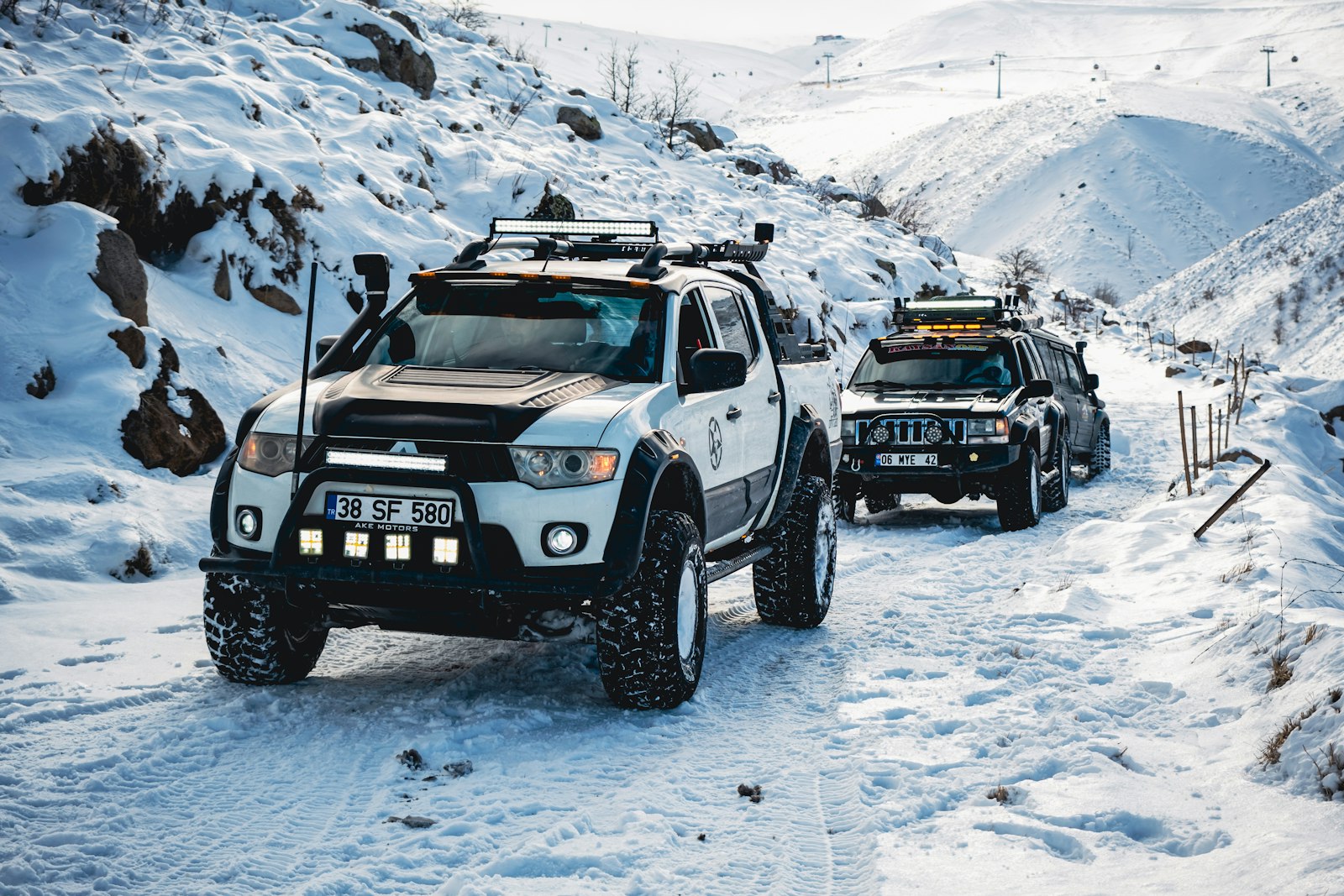
Driving in snow is one of the most fun things you can do in a 4×4, and also one of the easiest ways to get properly stuck. The difference usually comes down to preparation: tires that actually grip snow, the right pressure, chains when they’re needed, and a plan for when it goes wrong. This guide is about unplowed forest roads and trails, not icy highways, where normal road pressures and slower speeds are the rule.
Start with the tires
Look at the sidewall. Two markings matter, and they don’t mean the same thing.
| Marking | What it means |
|---|---|
| M+S (mud and snow) | Based only on tread pattern. It doesn’t guarantee any snow performance. |
| Three-peak mountain snowflake (3PMSF) | Passed a packed-snow acceleration test, at least 10% better than a reference tire. |
According to Tire Rack, the 3PMSF test only measures acceleration on packed snow. It doesn’t test braking, cornering or ice. So a 3PMSF all-terrain is a good step up from a basic all-season tire, but it isn’t the same as a dedicated winter tire on ice. Many popular all-terrains now carry the symbol. If yours don’t, that’s worth knowing before the first snowy trip. Our overlanding tire guide explains the main types.
How low should you air down in snow?
Lower pressure lengthens the tire’s footprint so it floats on top of soft snow instead of digging down. On packed or icy surfaces, however, keep normal road pressure, because there’s nothing to float on.
For deep, soft snow, OVRMag lists very low pressures, as low as 2 to 8 psi, but that’s on purpose-built rigs, often with beadlocks. For a typical overland vehicle on standard wheels, start much higher. Go down in steps, for example to half your road pressure, then a little lower if you’re still sinking. Low pressure at speed can pull a tire off the rim in deep snow, so keep it slow, and air back up before you return to the road. Our airing down guide covers the process and the kit.
When to fit chains
Chains are the biggest traction upgrade you can carry. They’re most useful on steep, icy or hard-packed sections, and some mountain roads require them in winter. Before you buy, though, check two things:
- Clearance. Your owner’s manual says whether chains can be used and what type. Bigger tires and lifted suspension change the clearance, so check around the wheel well too.
- Fit them once at home. Doing it the first time on a cold, dark roadside is miserable. Practise in the driveway with gloves on.
If you only have one pair, your vehicle manual says which axle they belong on. Keep speed low, usually around 30 mph (50 km/h) or whatever the chain maker says, and take them off as soon as you reach bare road.
Driving technique
- Smooth beats fast. Gentle throttle, gentle steering and gentle braking. Sudden inputs break traction.
- Keep momentum on climbs, but don’t race. Stopping halfway up a snowy hill is hard to recover from.
- Use low range on steep descents and let the engine brake, rather than riding the brakes.
- Look for the ruts of the vehicle ahead, or straddle them if they’re too deep for your clearance.
- Turn around early. If the snow is getting deeper and the day shorter, that’s your sign.
Getting unstuck
When you stop moving, stop spinning. Wheelspin polishes snow into ice and digs you in deeper. Then work through it in order:
- Get out and look. Snow packed under the axles or chassis is often what’s holding you, not the wheels.
- Dig out in front of all four tires and clear the snow from under the vehicle.
- Air down a little more if you haven’t already.
- Rock gently: forward, reverse, forward, using the space you’ve cleared.
- Use recovery boards under the drive wheels, then a snatch strap or winch if you need it.
A proper shovel, recovery boards and a strap with rated soft shackles are the core kit. We explain each piece in overland recovery gear explained.
Check conditions before you go
Snow on a forest road can be very different from snow in town. Call the ranger station about road status and seasonal closures, and look at avalanche forecasts if you’re heading into the mountains. Also, plan to turn around by early afternoon. Days are short in winter, and snow that was soft at noon can freeze hard after sunset.
What else to carry
Snow trips need more than traction. Carry warm clothes for everyone, food, water that won’t freeze solid, a way to call for help and enough fuel to run the heater if you get stuck for a night. Our winter overlanding checklist covers the rest, and our extra fuel guide helps you work out the margin.
FAQ
Is 4WD enough in snow?
4WD helps you get moving, but it doesn’t help you stop or steer. Tires and speed matter more.
Should I drive alone in snow?
On remote snowy tracks, travelling with a second vehicle is much safer. If you go alone, carry a satellite messenger and tell someone your route.
Sources
- Tire Rack – What is the three-peak mountain snowflake symbol?
- OVRMag – How low can you go? Trail tire pressure explained
Tire pressure and chain advice depends on your vehicle and tires. Always follow your vehicle and tire manufacturer’s guidance, and check local chain laws.
Featured photo: Muhammed İkitepe on Unsplash.