Ask a room full of overlanders what part of their build gave them the most headaches and a lot of them will say the dual battery wiring. Picking a DC-DC charger is the easy bit. Then you’re into cable gauges, fuse ratings, where the solar plugs in, how you’ll actually know what’s left in the battery, and how to make the whole thing look like it wasn’t done in a car park.
REDARC’s answer is REDWorks: a powder-coated plate with the charger, battery monitor, fusing and Anderson outlets already mounted and wired. It went on sale in Australia in November 2025 and is now listed on REDARC’s US store in three overland versions. We went through the specs and the pricing to see who it actually makes sense for.
What you get on the plate
Every REDWorks panel is built around one of REDARC’s BCDC DC-DC chargers, so it charges your auxiliary battery from the alternator and from solar at the same time. REDARC’s Green Power Priority means the charger uses solar first and only leans on the alternator for the rest, which is handy on vehicles with smart alternators.
Fridges, lights and solar panels plug in through Anderson connectors, so you don’t need a crimper every time you add something. You still have to run cable from the start battery to the panel and supply the auxiliary battery yourself. REDARC sells separate start-battery wiring kits for this, and in some markets it bundles the Scout25 with a 100Ah lithium battery, which tells you the battery isn’t part of the panel.
The three US models
| Model | Charger | Monitoring / control | US price |
|---|---|---|---|
| Scout25 | BCDC Core25, 25A, MPPT solar built in | Smart Battery Monitor (Bluetooth) | $1,349 |
| Nomad50 | BCDC Alpha50 R, 50A | Smart Battery Monitor (Bluetooth) | $2,199 |
| Pioneer50 | BCDC Alpha50 R, 50A | TVMS Rogue management system | $2,899 |
Prices are from REDARC’s US store at the time of writing. Australia and New Zealand also get 40A and 50A versions of the Scout and Nomad, and there’s a bigger QuickFit line aimed at RV and van builders.
Scout25
The small one. It’s about the size of an A4 sheet, which is the main selling point: it’ll fit behind a drawer system or under a seat where a full DIY layout wouldn’t. The Core25 charger handles both alternator and solar input up to 25A, and the Bluetooth monitor shows state of charge and time remaining on your phone. There are LED indicators on the panel for charge status and faults, plus a 50A Anderson outlet for heavier loads.
For a fridge, some camp lights and charging phones on weekend trips, it’s enough.
Nomad50
Same idea, twice the charging current. The Alpha50 R charger is the reason to step up: if you’re running a bigger lithium bank or you tend to drive an hour and then sit for three days, 25A starts to feel slow. REDARC also lists start battery recovery on the Alpha50 R based panels, which can top up a flat start battery from the auxiliary side.
Pioneer50
The Pioneer keeps the 50A charger and swaps the simple monitor for REDARC’s TVMS Rogue. That turns it into a control system: you can switch and automate individual circuits from an app or display instead of wiring a row of switches. If you don’t care about controlling your water pump from your phone, it’s $700 you don’t need to spend.
25A or 50A? Do the maths first
This is the decision that matters most, more than which badge is on the panel. In rough terms a 25A charger puts back up to about 25Ah for every hour of good charging, and a 50A unit about twice that, if the battery will accept it.
Take a typical setup with a 12V fridge, lights and devices using around 70Ah a day. The Scout25 needs close to three hours of driving or strong sun to replace that. The Nomad or Pioneer does it in about an hour and a half. If your trips involve long driving days, 25A is fine. If you camp in one spot for several days and rely on solar under trees, the extra current earns its keep.
If you haven’t worked out your daily usage yet, our LiFePO4 sizing guide walks through it device by device, and our lithium vs AGM comparison covers which battery to pair it with.
What are you paying for?
Here’s the part most launch coverage skips. In Australia, REDARC lists the BCDC Core25 charger on its own at A$399, while the Scout25 panel built around it lists at A$1,479.50. So the charger is roughly a quarter of the panel’s price. The rest covers the battery monitor, fusing, Anderson outlets, the plate itself and, above all, the wiring and testing you don’t have to do.
Whether that’s good value depends on you. If you’re comfortable with heavy cable and fuse selection, building the same system from separate parts will almost certainly cost less. If you’d otherwise pay an auto electrician to design and wire it, the gap shrinks quickly, and you get one warranty covering the whole system instead of several.
Our take: REDWorks makes most sense for people who’d rather buy a known-good system than learn 12V wiring, and for anyone who might move the setup to their next vehicle. Confident DIY builders will get more for their money doing it themselves.
Quick answers
Do REDWorks panels work with lithium batteries?
Yes. REDARC says they charge all common automotive battery types, including LiFePO4.
Do I need a separate solar controller?
No. The BCDC charger on each panel has MPPT solar regulation built in, and solar plugs in through an Anderson connector.
Is the battery included?
No. You supply the auxiliary battery and the cable run from the start battery. REDARC sells wiring kits and, in some markets, battery bundles.
What’s the difference between the Nomad50 and Pioneer50?
The charger is the same. The Pioneer adds the TVMS Rogue, which lets you control and automate circuits from an app or display.
Sources
- REDARC – REDWorks Power Panels (US)
- REDARC – REDWorks launch announcement
- REDARC Australia – Scout25 Power Panel
- REDARC Australia – BCDC Core25 charger
- Overland Expo – REDARC Scout Panel
We haven’t tested REDWorks panels ourselves. This article is based on REDARC’s published specs and prices, which can change.
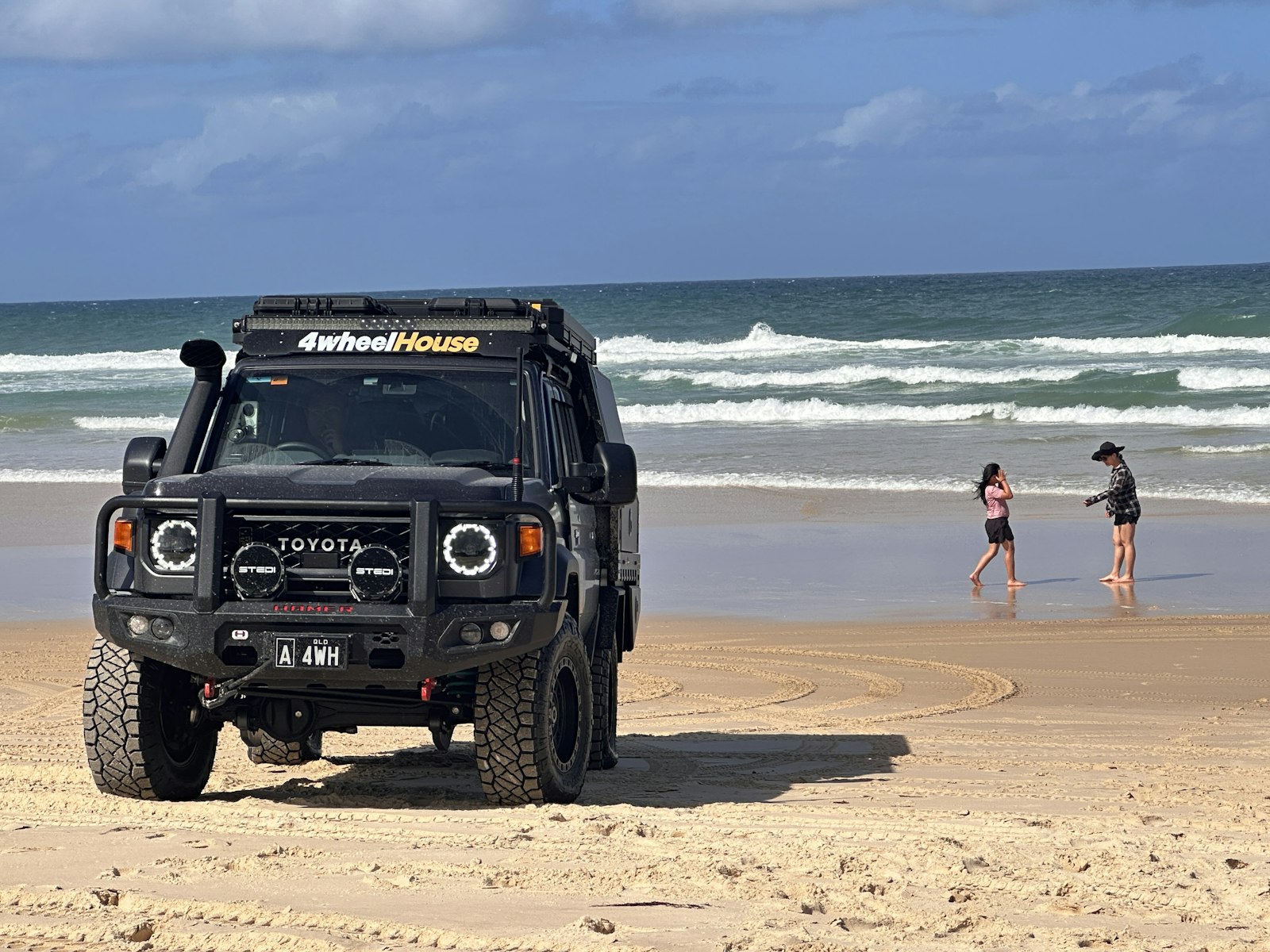
Featured photo: 4Wheelhouse on Unsplash.
Leave a Reply
You must be logged in to post a comment.